
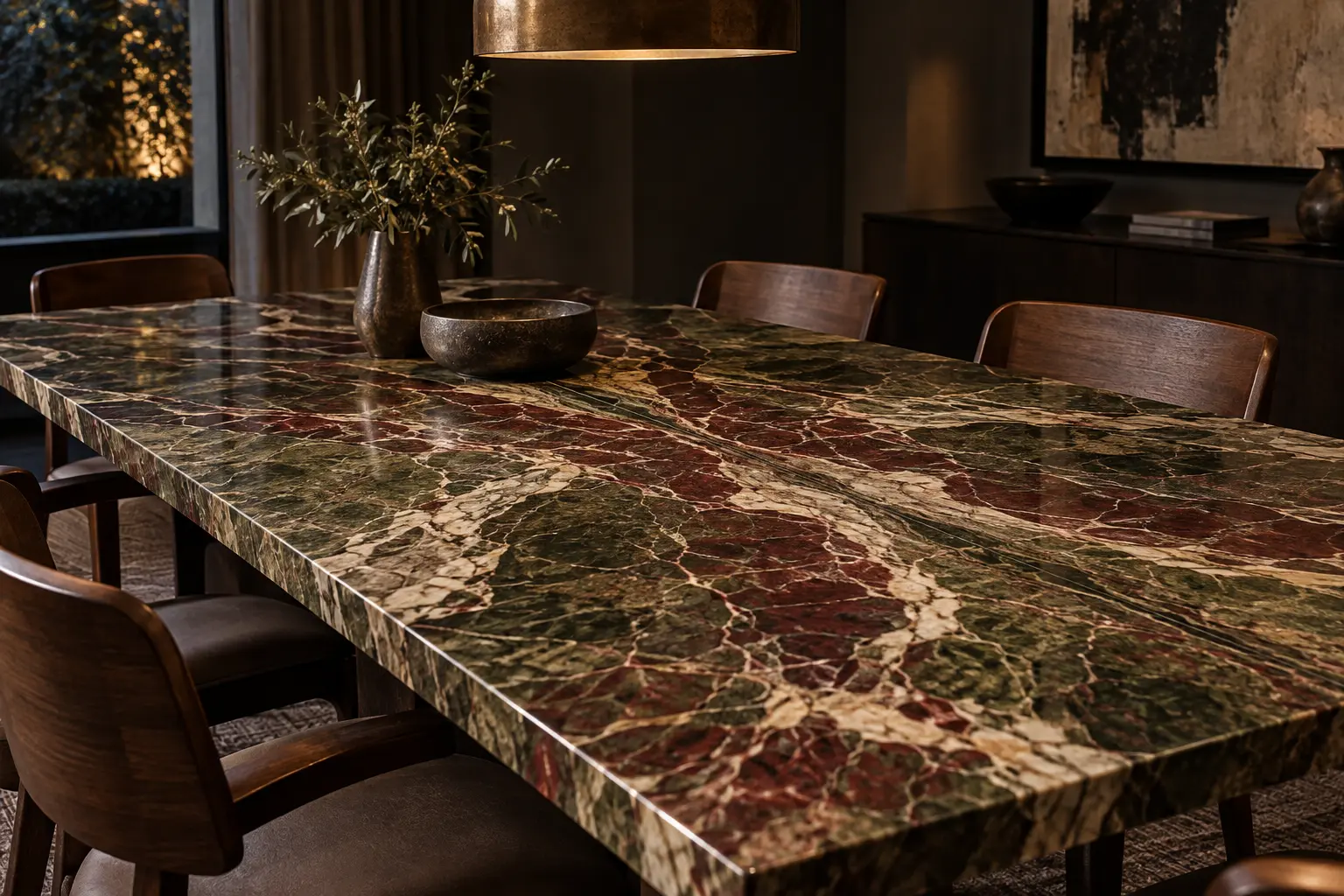
Protecting Your Premium Investment
Specifying premium Turkish marble for a commercial interior in the UK—such as a grand hotel lobby, a luxury retail boutique, or a corporate headquarters—makes an immediate, undeniable statement of prestige and quality. However, marble is a porous, calcareous natural stone. Without a rigorous, professional maintenance protocol, the heavy, relentless daily footfall typical of UK commercial environments will quickly degrade the stone’s surface. Dirt, grit, acidic spills, and standing water tracked in from the unpredictable British weather can lead to scratching, etching, and severe discolouration. Protecting your investment requires an understanding of professional sealing and ongoing maintenance routines.
The Crucial Role of Penetrating Sealants
The first and most critical line of defence for any commercial marble floor is a high-quality, professional-grade penetrating sealant (impregnator). Unlike topical sealers that sit on the surface and wear away rapidly under heavy traffic, penetrating sealants absorb deep into the microscopic pores of the marble. This creates an invisible barrier that repels water, oils, and dirt from within the stone, without altering the marble’s natural slip resistance or breathability. We strongly advise our UK clients that commercial marble floors must be thoroughly sealed immediately upon installation and re-sealed on a strict schedule—typically every 12 to 18 months, depending on the volume of foot traffic.
Daily Cleaning Protocols for UK Facility Managers
Improper daily cleaning is the leading cause of marble degradation in commercial spaces. Standard, off-the-shelf commercial floor cleaners often contain harsh acids, alkalis, or abrasive compounds that will immediately etch the surface of calcareous stones like Mugla White or Burdur Beige, stripping away the polish and leaving dull, permanent marks. Facility management teams must exclusively use pH-neutral, specifically formulated natural stone cleaners. Furthermore, dust and grit act like sandpaper under hundreds of shoes; therefore, implementing high-quality walk-off matting at all exterior UK entrances is essential to trap abrasive particles before they reach the marble.
Addressing Etching and Re-Polishing
Even with the strictest maintenance, accidents happen in commercial environments. An acidic spill (such as wine, citrus juice, or certain cleaning chemicals) will create a dull "etch" mark by reacting with the calcium carbonate in the marble. For minor etching, professional stone restoration teams in the UK can use specialized polishing powders to restore the shine. However, for heavily trafficked areas that have lost their overall lustre over several years, a professional re-polishing and diamond honing process may be required to bring the Turkish marble back to its original, breathtaking factory finish.